A Partin History
But then came the killing shot that was to nail me to the cross.
Edward Grady Partin.
And Life magazine once again was Robert Kenedy’s tool. He figured that, at long last, he was going to dust my ass and he wanted to set the public up to see what a great man he was in getting Hoffa.
Life quoted Walter Sheridan, head of the Get-Hoffa Squad, that Partin was virtually the all-American boy even though he had been in jail “because of a minor domestic problem.”
– Jimmy Hoffa in “Hoffa: The Real Story,” 1975, published just before he vanished from a Detroit parking lot.
I’m Jason Partin.
My biologic father is Edward Grady Partin Junior, a high school dropout and drug dealer who was arrested in 1985 during the height of President Reagan’s war on drugs; after he was released from prison 1987, he returned to school became a lawyer and is currently a public defense attorney in East Baton Rouge Parish, Louisiana.
His father – my grandfather – was Edward Grady Partin Senior, the Baton Rouge Teamster leader famous as the mole in Jimmy Hoffa’s inner circle whose 1964 testimony sentenced Hoffa to prison for jury tampering. My family was famous for a while, and, because of threats from the mafia and Teamsters loyal to Hoffa, we under 24 hour federal protection from 1964 until Hoffa vanished from a Detroit parking lot on 22 November 1975. (I was only four years old then, so I don’t remember the details.) I was born on 05 October 1972.
I was conceived in either late December of 1971 or early January of 1972 by Edward Partin Junior and Wendy Anne Rothdram (it’s only a coincidence that her initials spell WAR). Wendy was my mother, and I called her Wendy until the day she died on 05 April 2019.
I’ll explain why I called my mother Wendy and how that’s related to my Partin family next, but it’s a long story and in 2019 all I wanted to say publicly was what I hastily wrote for her obituary the morning after we removed her from life support. It was published The Baton Rouge Advocate in print on 07 April, 2019, and online on the 8th and 9th. This is what it said:
Wendy Rothdram Partin, a resident of St. Francisville, LA, passed way on Friday, April 5th, 2019 at the age of 63. Wendy attended Glenoaks High School in Baton Rouge, LA, and retired from Exxon Mobil. She is survived by her son, Jason Ian Partin, of San Diego, CA. She was preceded in death by her mother, Joyce Rothdram, and her aunt and uncle, Lois and Robert Desico, all of Baton Rouge, LA. During her retirement, she became a master gardener and enjoyed helping people with their lawns. She enjoyed cooking, and took food to anyone she knew who was ill or grieving. Wendy loved animals, and worked with local shelters to foster dogs until they found permanent homes. She passed away unexpectedly from liver failure. In lieu of gifts or a service, please spend time sharing what you love with your neighbor, listen to what they love, and help each other.
To plant trees in memory, please visit _____
There was more to tell but obituaries are short and sweet.
Just like Wendy.
Wendy Anne Rothdram was born on 08 August 1955 in Richmond Hill, a middle class suburb of Toronto, Canada. When she was four years old, Wendy’s mother – my Granny, Joyce Hicks Rothdram – fled an abusive husband and took Wendy to Baton Rouge to temporarily live with my Auntie Lo and Uncle Bob. Within a year Granny found work as a typist in one of the burgeoning petrochemical plants north of Baton Rouge and saved her pennies and bought a small house in an affordable neighborhood just off I-110 and only a mile from the Baton Rouge airport and Glenoaks school district, where Wendy attended Glenoaks Elementary, Middle, and High Schools.
In the fall of 1971 Wendy Anne was a sixteen year old and an incoming junior at Glenoaks High School. She had grown into a petite but curvy 5’1″ athletic girl with long wavy strawberry blonde hair who most people said was strikingly attractive. She had hazel eyes that crinkled when she laughed, and she laughed often. Wendy still had a bit of her nasally Canadian accent, though she never finished sentences with ‘eh like Auntie Lo and Granny sometimes did, so she stood out among the strong southern Louisiana accents of the 150 students at Glenoaks High School who liked to call her Wendy Anne.
That’s when she met the school’s drug dealer, Edward Grady Partin Junior.
He was a tall and intense young man with a slight southern Mississippi accent. His grandmother – my grandfather’s mother, Grandma Foster – lived three streets over from Granny and my dad moved in with her and attended Glenoaks. He learned he could walk to Wendy Anne’s house after school, when Granny was still at work.
My dad rarely smiled unless he was high, but he was high often and was handsome and girls flocked to him. He fit the stereotype of a defiant teenager, and he was tall and strong and had long black hair and drove an expensive sports car and defied anyone to try and draft him. The Vietnam conflict was in full swing and the Mai Lai massacre was daily news and he said it would take an army to drag him off to war. Knowing what I know now, it would have taken more than a platoon of paratroopers to get him to do something he didn’t want to do; he was big and strong and grew up with my grandfather and his brutal Baton Rouge Teamsters and was immune to threats.
Wendy was smitten. She got high and lost her virginity to my dad on what I’ll say was New Years Eve, 1971; they never agreed on a date, so I split the difference. What everyone agrees on is that two weeks later they learned she was pregnant with me.
Wendy couldn’t afford an abortion (partially because Chief Justice Earl Warren’s Roe versus Wade case that legalized abortion was still a year away). My dad could, but he proposed that they drop out of school and get married in Mississippi. She accepted, and they drove his sports car for an hour up Highway 61 and past the hamlet of Saint Francisville and across the border to Woodville, Mississippi, where my grandfather had been born.
Everyone in Woodville knew the name Edward Partin. Woodville was – and is – a quaint rural town of only a few hundred people surrounded by pine forests and centered around a county courthouse and a nearby lumber industry from the Netterville Sawmill. To this day, it hosts an annual springtime strawberry festival that attracts people from southern Mississippi, southern Louisiana, and northern Florida. It’s a town where everyone knows everyone else. My grandfather was born in Woodville, Mississippi in 1926; his father, my great-grandfather Grady Partin, was a typical sawmill worker and prohibition-era bar dweller who was in and out of jail. In the 1930’s Grady fled the state and left his wife, three sons, and daughter to fend for themselves during the Great Depression. Everyone in town knew what happened and it was daily gossip.
My grandfather was the oldest of Grady’s sons by a few years; he helped take care of his mother and siblings after taking care of himself. Everyone in Woodville knew everything Ed Partin did, especially because he was a handsome, charming, and physically imposing man with strawberry blonde hair and sky blue eyes who instantly drew attention walking down Woodville’s narrow streets where he stood out like an ox who escaped a farm and was strolling downtown.
My grandfather was 17 the first time he was arrested in Woodville. It was the middle of the Great Depression, and after Grady Partin left them they went to bed hungry most nights. He his little brother – my great uncle Doug Partin – decided to make money by stealing all the guns in Woodville. They broke in to the local Sears and Roebuck store through a vent in the roof, and my grandfather tied a rope around Doug’s waist and lowered him down and waited for Doug to fill his arms with shotguns, rifles, and pistols. Ed heaved Doug back up hand-over-hand, again and again, until they had a pile of guns on the roof.
They loaded their loot into a car my grandfather had either borrowed or stolen (we never learned which) and sped down Highway 61 past Saint Francisville and on to New Orleans. The total trip was only about two and a half hours. In New Orleans, they found people wanting to buy guns and who were low-level members of the Marcello mafia family. The returned to Woodville with cash in their pockets and bought motorcycles and spent a few weeks riding around town and hooting and hollering and splurging on whole chickens for the family’s dinner and having what Doug would always recall as the best summer of his childhood.
Woodville was suffering from The Great Depression and more than 30% of the men were out of work. My grandfather was still young and Doug was ignorant and they flaunted their newfound wealth in a town where everyone knew everyone’s business. The sheriff arrested them and found a few rifles hidden under their mattress. Doug was released because he was a kid, but the judge in Woodville’s county courthouse found my grandfather guilty of breaking and entering and grand larceny. He was facing at least ten years in prison.
But by then World War II was underway and the military needed big men to fight, so the judge offered my grandfather a deal to avoid jail if he joined the marines. My grandfather studied the judge’s contract for a few minutes and agreed. Though a high school dropout, my grandfather would become skilled at reading details in contracts, a skill he shared with Jimmy Hoffa and most Teamsters leaders who negotiated contracts between labor and management. My grandfather read his first contract at seventeen, and he noticed that it said he would be free if he joined the marines, but it didn’t say that he had to remain. He agreed and joined; two weeks later he punched out the commanding officer and became a dishonorably discharged marine but a free man.
He wandered the country for three years full of fun and adventure. He tried boxing professionally but broke his right hand and then decided to return to Woodville. By then his younger brothers were either in the military or trying to earn their livelihood in a larger town, and all men my grandfather’s age were off fighting in the war. I don’t know where my great-aunt was then. But I know that Edward Partin Senior was a big, rugged man who knew how to fight and could interpret legal contracts, and that he quickly took over both the sawmill. Soon after he took over the trucker’s union that delivered trees and hauled away cut lumber. He was the monopoly between Woodville’s labor and external labor contracts.
All of Woodville’s commerce was controlled by Edward Partin, and everyone knew his name and could easily recognize him walking down any of the streets. World War II money had flowed into Woodville and lifted it out of poverty; an air force recruitment depot opened nearby, and a shotgun shack began operating a brothel to cater to the young airmen who had weekly paychecks. In 1942 and soon after returning from his three years of wandering, Edward Partin Senior was arrested for raping a young girl in that brothel. He was found not guilty in 1943 because of one juror of his Woodville peers; Uncle Doug would write in his 2017 autobiography that he met one of the jurors, Woodville’s barber, and as he cut Doug’s hair he explained his vote of not guilty by saying: “Ain’t no white man deserve to go to jail for anything he did to a [black] girl.” (The Woodville barber used another word.)
Life magazine whitewashed the act as a local pimp filing false charges to vilify the locally admired union leader for reasons never made clear. I never learned what actually happened, but I believe Edward Partin could get away with anything in Woodville.
My grandfather met my grandmother and they were married six weeks later. By the mid 1950’s they had five children – my dad, aunts Janice, Theresa, and Cynthia, and my uncle, Keith – and had outgrown Woodville. In 1957 he brought his entire family, including his mother, step-father, and three siblings to Baton Rouge and took over Teamsters Union Local #5. Baton Rouge is a college town, capital city, and river port hub 80 or so miles up the Mississippi from New Orleans; in the 1950’s, the population of Baton Rouge was around 100,000 and big enough for the growing Partin family. That’s when he began working with Jimmy Hoffa and the International Brotherhood of Teamsters to grow their dominance in the south.
After the Look! and Life features in 1964, many news interviews and local articles focused on my grandfather. By 1972 he was recognized anywhere in Louisiana and had become a legend in Woodville. When Wendy and my dad showed up (with me tagging along inside), anyone named Edward Partin would have had a bed to sleep on and a hand in getting anything they needed.
Wendy arrived in Woodville not knowing any of that history. But she knew Mississippi laws didn’t require parental consent for a 16 year old girl to marry a 17 year old boy. Two days after arriving in Woodville, Wendy Anne Rothdram returned to Baton Rouge as Mrs. Edward Grady Partin.
She and my dad moved into one of my grandfather’s rural houses near the swampy forests surrounding the Amite River Bridge. It was already furnished and listed under Edward G. Partin, so hey didn’t have to change names for utilities or the phone book and they quickly settled in to a new lifestyle. My dad began growing weed on dry patches hidden deep in the swamp, and I was born nine months later.
Wendy had a series of nervous breakdowns over the next year and tried to flee our home. The final time was when my dad left her with $200 for food and rode to Miami on motorcycles with his friends to buy a truck load of drugs in the Caribbean and then travel to Jamaica to see a Bob Marley show in Kingston. They traded motorcycles for boat tickets in Miami, where the ten-year old Teamsters Local #769 was already working with Miami mafia boss and Cuban exile Todos Santos Traficante Junior to control shipping to and from Latin America.
Baton Rouge arrest records show that my dad returned with shipments of prescription opioids that he intended to sell in Baton Rouge. Puerto Rico had just began opening American offshore pharmaceutical manufacturing for tax breaks and to set an example for communist Cuba, which was still run by Fidel Castro and under an American embargo, and Teamsters had the shipping contracts to haul the drugs to Puerto Rico’s port. A few years before my dad showed up, the president of Puerto Rico Teamsters Local #901, Frank Chavez, was so infuriated by my grandfather’s betrayal of Jimmy Hoffa that he publicly said: “I’m going to fucking kill Edward Partin!”
Chavez was shot and killed by his bodyguard soon after, and none of his replacements have said anything ill of any Partin since. Like in Woodville, Ed Partin Junior would have had beds to sleep on and hands to help getting whatever he wanted in Miami and the Caribbean. He and his other dropout friends from Glenoaks were gone a couple of months and didn’t call Wendy to say when they’d return.
Wendy didn’t have a car, and she felt trapped in her rural home near the murky Comite River and surrounded by marshy forests. Linda White, Wendy’s best friend in high school, had a car and sometimes picked Wendy up to take her around town with me in tow. One day Wendy was holding me in her arms and looking for work on a coffee shop community note board when she saw a handwritten note asking to share gas to California. She impulsively reached into her purse and pulled out a dime and reached for the coffee shop’s payphone and called the number. She told the young man she had cash for gas and that she could leave that day.
On their way out of Baton Rouge they left me at a daycare center two miles down the road from Glenoaks High School. She gave the manager Linda White’s phone number as my emergency contact. Wendy and the stranger drove back onto I-110 at the airport exit and turned west on I-10 and drove it over the Mississippi River bridge and set their sites on the end of I-10 to where it ended at the Santa Monica pier in Los Angeles, California, 1,830 miles away.
Sun set at the daycare center and no one picked me up. The manager called Linda’s phone number. Linda’s father, the coincidentally named Ed White who became my PawPaw, answered the phone. He was the custodian and groundskeeper at Glenoaks and had known my parents since they were 13 years old ninth grade kids; and he had known me since the first few weeks of my birth, because Wendy had taken me over to his house to show Linda. PawPaw knew everything he needed to know and he dropped what he was doing and rushed to the daycare and picked me up and took me home and called the police.
A few days later the only family court judge in East Baton Rouge Parish, Judge Pughe – a Cajun name pronounced puh-yew, like the sound a cartoon character makes when smelling a bad odor – removed me from Partin custody and assigned PawPaw as my legal guardian.
Wendy woke up in Los Angeles and took a bus back to Baton Rouge. She arrived and coincidentally my dad and his friends returned from Miami with a truckload of opioids and were arrested; inexplicably, he was instantly freed (though the Baton Rouge police station confiscated the opioids as evidence). Both of my parents learned what had happened while they were gone, and they began fighting each other.nJudge Pughe died by alleged suicide soon after and I languished in the foster system while East Baton Rouge Parish recruited a new judge. A few years passed.
Wendy was allowed to visit me two days a month, and she usually took me to play at a park near PawPaw’s house and the daycare center where she had left me on her way to California. She was ashamed of being a single mom and a high school dropout who had abandoned her son, and she taught me to call her by her first name so people would think I was her little brother. It worked and old habits are hard to break; I called her Wendy until the day she died. My dad was allowed to visit me two days a month including one overnight; he taught me to call him daddy, which lingered until he was out of prison and I began calling him dad, which is what I still call him. The split custody of me for half the year until my dad went to prison in 1986. I was emancipated from the foster system in 1989 and left Louisiana in 1990.
Wendy’s liver failed in 2019 from excessive alcohol and she slipped into a coma on 03 April 2019. I was coincidentally living on the coast of California, and I bought the first airplane ticket and flew 1,830 miles to the Baton Rouge airport and was able to spend one night by her side as she lay unconscious. Wendy passed away early in the morning on 05 April 2019. She was only 63 years old.
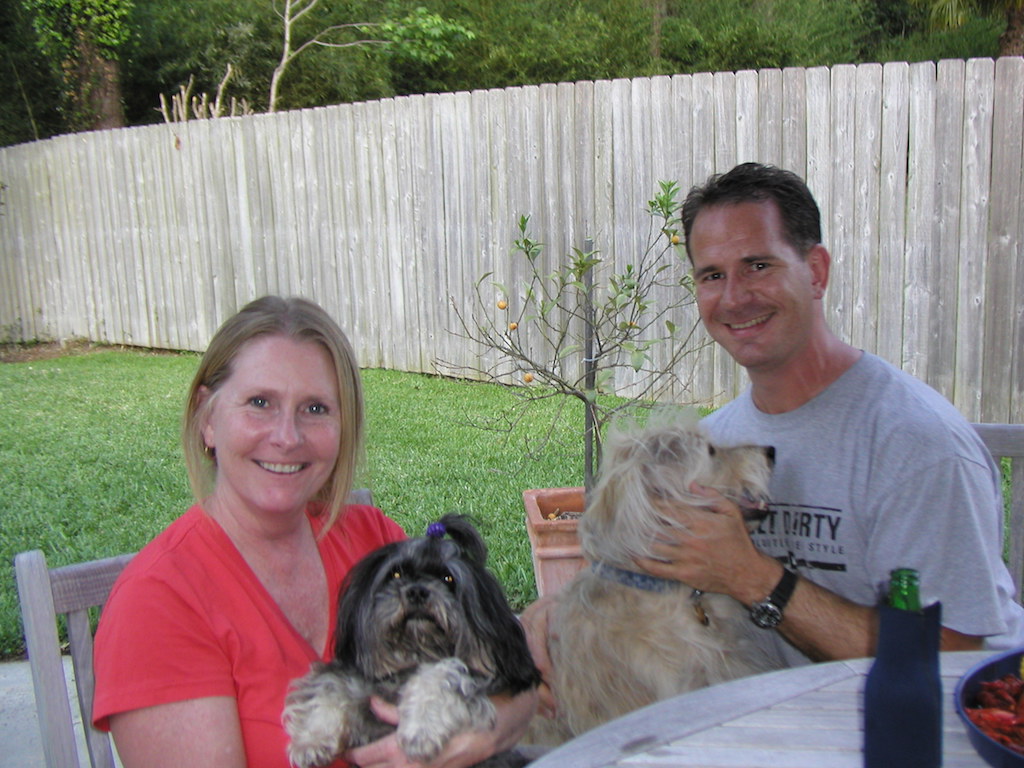
Later that day I was in shock and fatigued. I hastily wrote her obituary and then focused on the photos in my phone to find one of her for the print and online editions of the Baton Rouge Advocate. I chose a photo of Wendy and two rescue dogs from around ten years prior, when she was only 53 and would be recognized by classmates from Glenoaks when she was a teenager; coworkers from the Exxon plastics manufacturing plant, where she had worked for 25 years but retired 10 years prior; and by volunteers at the West Feliciana Parish Humane Society, where she had been volunteering for a few years before passing. The mortician helped me shorten my first draft to what you saw was published by The Advocate.
I chose to include that she passed from liver failure because she had become an alcoholic later in life, and I wanted to illuminate the consequence of alcohol abuse; Granny, Auntie Lo, and Uncle Bob were all alcoholics who died in their early 60’s, and several of my childhood heroes also suffered from alcoholism in a generation where it seemed every role model had a cocktail in their hand. Wendy started drinking late in life and was a reserved person who rarely discussed her past; I didn’t want to dwell on alcohol abuse, but I also didn’t want to ignore the pattern. It was my way to acknowledge a pattern that had cost Wendy and me our entire family, similar to how judges document the logic behind their decisions for posterity’s sake. It was a gesture of hope.
The online version of Wendys’ obituary quickly accumulated surprised comments from a few old friends from Glenoaks who I recognized from childhood memoriesr, and colleagues from Exxon whom she I had mentioned but I had not met. A few neighbors and volunteers posted, too, but I did not know them; Wendy had moved to Saint Francisville after I had left Louisiana decades ago, and those neighbors probably knew her better than I did. Except for a friend or two from her days at Glenoaks, no one knew Wendy’s history with the Teamsters and mafia.
I did not post comments online. Like Wendy, I’ve always been a private person who remained offline, but that wasn’t the reason. I didn’t know what to say about Wendy’s sudden and unexpected passing; it was a long story and she was a private person and I was in shock.
And though no one asked, I felt an urge to explain why I called my mother Wendy. I wanted people to understand why she abandoned me and what it took for her to get me back.
What I’ve said so far is too simple; saying someone had a nervous breakdown is an easy escape. I wanted to nail down the reason Wendy abandoned me as definitively as my grandfather’s testimony nailed Hoffa to a cross.
But I didn’t know where to begin, so I remained silent. Then the Covid-19 pandemic hit and I was safe but shuttered inside and revisiting my mother’s obituary. I wanted to share how her story was related to the Partins, and how she began drinking. So I spent most of 2020 to 2022 digging deeper for Hoffa’s body and what happened to JFK by downloading files and articles from the internet, researching old records, digging through the new San Diego downtown library’s top floors, and ordering from Amazon what wasn’t already on my bookshelf. And memories of what my Partin family told me.
This is a memoir, but it has hints of true crime and historical fiction (I’ll get to that at the end). But to explain why Wendy fled to California and what happened to Hoffa, I need to go share more about Edward Grady Partin, which is next.
Go to the Table of Contents