
Partin vs Partin
“You either loved Ed Partin or you hated him. There was no in between.“
– Douglas Westley Partin in his 2017 self-published autobiography, “From my Brother’s Shadow: Teamster Douglas Westley Partin Tells His Side of the Story.”
As soon as Big Daddy stood up in the Chattanooga courtroom in 1964 and testified against Jimmy Hoffa, people wondered why someone as powerful as Hoffa didn’t just have him killed.
They wondered the same while Hoffa was in prison, and then again when he was released.
The Irishman explained:
“Partin was no good to them dead. They needed him alive. He had to be able to sign an affidavit. They needed him to swear that all the things he said against Jimmy at the trial were lies that he got from a script fed by Bobby Kennedy’s people in the Get Hoffa Squad. Partin had to say that he did all of this because he had kidnapping charges hanging over his head and not because Jimmy had made threats to whack Bobby. That was Jimmy’s best chance on the jury-tampering matter. Partin knew that nobody was going to kiss him as long as he strung them along. Partin gave Jimmy’s lawyers useless affidavits and even a deposition. In the end, they never really got him to say that he railroaded Jimmy Hoffa. All they ever got out of him about railroading amounted to no more than, “Partin, me boy, is that the Chattanooga Choo Choo?”1
Five weeks after the Chattanooga trial, Hoffa was on trial in Chicago. Big Daddy, Mamma Jean, and my dad and his siblings were all under 24 hour protection by an army of federal agents Hoover had hand-selected from the former Get Hoffa task force. Hoffa met with close allies and planned.
The Irishman said:
“At the Chicago office Jimmy told me point-blank to tell our friends back East that nothing should happen to Partin. Jimmy told me he had a good defense for the Chicago thing, and they were still working on Partin for an affidavit on the Chattanooga thing”
The Chicago thing was yet another case about abuse of the Teamster pension fund, this time centered around fuding real estate development in Florida called Sun Valley Village that was purported to benefit senior Teamsters and mafia heads; both owned lots in the development. Hoffa would be found guilty and a judge would add a few years atop his sentence for jury tampering from the Chatanooga trial, but Hoffa did indeed have a good defense for the Chicago thing, and that case was overturned.
The Irishman met with Hoffa just after Big Daddy’s testimony and published this exactly forty years later:
“I left Chicago and went back to the fund and games in Philly, and I passed the word among our friends about Partin.”
Frank remembered targeting Big Daddy after 40 years; it was that clear that my grandfather shouldn’t be killed, but that the mafia had to do something – anything – to convince him to change his testimony. Hoffa’s friends pursued the Partins while Hoover’s agents protected them, and Hoffa’s attorneys chased Big Daddy’s reputation while Bobby Kennedy shielded it. Big Daddy never wavered.
Hoffa lost his final appeal and began serving prison while Big Daddy rose in power. In a maximum security prison with eight hours a day of forced labor, Jimmy Hoffa pondered what to do about my grandfather. He was only allowed one visit from friends or family every three months, but he could have unlimited meetings with his attorneys as long as those attorneys weren’t working other cases. He plotted his return to power through them.
Hoffa had some of the most expensive attorneys in America who understood client-attorney privileges and knew how to talk in code. Hoffa’s primary attorney was yet another coincidentally named Frank, an Italian American named Frank Ragano.
Frank Ragano only had three clients, and they would become the three primary suspects in orchestrating President Kennedy’s murder. Frank represented Jimmy Hoffa, Carlos Marcello, and Todos Trafficante Junior. Frank “The Lawyer” Ragano accepted no other cases so that he could always visit Hoffa and relay messages to and from his other clients. In his 1994 memoir about Hoffa and President Kennedy’s death, Mob Lawyer, Frank wrote:
Jimmy was working in a prison shop, stuffing mattresses and repairing inmate beds. To keep in physical shape he continued his regiment of pusups and weight lifting. He slept in a spartan eight-by-ten-foot cell that was furnished with a cot, a washbasin, a commode, a table, a chair, and a radio.
I had traveled over a thousand miles to see him and, anticipating that he would enjoy a chat, I was willing to stay several houser. “Let me get back to work,” Jimmy said, wolfing down his sandwhich. “As soon as you find out something, come back and see me. In the meantime I’ll keep the pressure on Partin. And don’t forget to tell the rest of the team to stay on Fitz’s back and not forget to get me out of here.“
The Irishman’s version is similar. That Frank said:
“In school Jimmy talked a lot about Partin. Frank Ragano was supposed to be getting an affidavit from Patin that the government set Jimmy up. There was a [District Attorney] in New Orleans who arrested Partin, and they were supposed to get that D.A. off Partin’s back in exchange for the affidavit. The same D.S. arrested Walter Sheridan for bribery, and that was supposed to help Jimmy by making Sheridan look bad in the papers. All that help came from [mafia boss Russel Buffalo’s] and Jimmy’s good friend, Carlos Marcello, the boss in New Orleans who had the D.A.“
Frank The Lawyer suggested to Hoffa that they try more legal approaches to prove Walter Sheridan and Hoover used illegal surveillance to monitor Hoffa’s defense team. The Lawyer said they were still working with my grandfather, so he’d like to attack them rather than Big Daddy. He documented Hoffa’s response:
“No, no,” Jimmy insisted. “He’s the quickest way to get a new trial. I’ll just have to find a way to put enough pressure on Partin so he’ll tell the truth. That goddamn bastard knows the government had us all under surveillance.”
Frank was right: Big Daddy was still working with Walter. By default, that meant he was also working with Hoover and Bobby Kenendy. By that time, Life magazine had published J. Edgar Hoover’s endorsement of Big Daddy’s word. The public believed that Hoffa had plotted to kill Bobby Kennedy in 1962 in a way so similar to how President Kennedy was killed in 1963, and many people began to suspect that either Hoffa or his mafia allies were responsible.
Frank The Irishman wrote:
“Some of our friends questioned Jimmy’s judgement, blabbing out loud like that to a man he hardly knew, Ed Partin. In our world you’ve got to keep things inside if you expect to be trusted. You don’t want people losing respect for you.”
Frank the attorney relayed messages between Hoffa, Marcello, and Trafficante. The mafia also wanted Big Daddy alive, partially because if Hoffa lost hope about getting out of prison, he knew so much about the mafia that it was possible he could become a witness against them in exchange for his freedom. And, I presume, it would be easier to kiss Hoffa after he was out of prison; in prison, there would be too much publicity and too many witnesses to get rid of.
In 1968 a six-part Life magazine series focused on the mafia organized crime in America. Big Daddy was showcased again, this time for refusing Carlos Marcello’s offer of $2 Million dollars if he changed his testimony against Hoffa. Pundits challenged Life by saying that the mafia wasn’t in the business of bribing when they could intimidate or kill. But no one yet realized the extent of money they owed the Teamster Pension fund, nor did the pundits do their homework on Hoffa’s ongoing defense efforts.
Low estimates are that the mafia owed the Teamster fund $121 Million, but it was probably more than that. By 1974, that fund had more than a Billion dollars lent out in commercial real estate, only 20% less than America’s largest bank, and an unknown but probably high amount of that $Billion was lent to mafia families. Carlos Marcello himself owed $21 Million to Hoffa. From prison, Hoffa sent word that all mafia debt would be forgiven if anyone could get my grandfather to change his testimony; offering Big Daddy $2 Million was good business for Marcello it saved him $21 Million.
And once Hoffa was out of prison, the mafia could see whether or not he returned to power. But Hoffa’s influence was dwindling and Big Daddy’s was rising.
After Big Daddy betrayed him, Hoffa was reluctant to share all of his plans with everyone, not even his lawyers. Frank Ragano was unaware of how much his other clients owed Hoffa; him writing a book in 1994 called Mob Lawyer that included “the inside account of who killed Jimmy Hoffa and JFK” implies Ragano would have talked too much and was just seeking money after part of the JFK Assassination Report was declassified in 1993 and unleashed people vying for book and film deals; Ragano, like a lot of people unused to taking pen in hand, tapped New York established author and journalist Selwyn Raab to coauthor his book in a style that would attract attention. In 1969 he even sued Time magazine for $2.5 Million in liability when they labeled him “a Cosa Nostra hoodlum.” In his memoir, Ragano demonstrated his ignorance of Hoffa’s secret war against Big Daddy when he wrote:
“Partin’s tale of being offered $2 Million by the Mafia was dubious. The mob wasn’t in the he business of taking money, not giving it away, and from my reading of santo and Carlos, Jimmy’s two closes allies in the Mafia, I surmised that they had no intention of springing Jimmy with their own money or raising a ransom for him.”
In his co-authored memoir, Frank the lawyer also claimed that Santo Trafficante Junior, who had died in 1987, told him he organized the hit on President Kenendy. To paraphrase Frank, the mob isn’t in the business of sharing secrets, and from my reading of Marcello and Trafficante, heads of Cosa Nostra take what they know to their grave.2
At least Frank The Irishman waited until he was on his own deathbed and had nothing obvious to gain. Not even Frank talks about the money mafia owed Jimmy Hoffa, and no one but Hoffa knew the extent. $121 Million is a low estimate, and it doesn’t include San Diego’s La Costa resort or dozens of Florida resorts from when New York mobsters were building winter communities. Nor does it include Las Vegas, which was practically built from the ground-up with Teamsters hauling materials to the desert construction sites to build casinos funded by their Teamster pension fund. It’s likely Hoffa was the middle man between all mafia families and more than a billion dollars of 1970’s money invested into America’s infrastructure.
None of the other heads of families offered a bribe to help Big Daddy change his testimony. But Hoffa led other battlefronts not even Ragano knew about. News and magazines began to report unprecedented violence in Baton Rouge. Big Daddy was shot and stabbed, and the local Teamster hall was shot up by unknown gunmen. Burgeoning petrochemical plants caught on fire, and hit and run manslaughters grew more frequent.
For a few years, Baton Rouge was as much of a war zone as countries I’d visit that were in actual wars. The Partins were disproportionately in the crossfire, and Big Daddy’s known houses saw those houses burned, blown up, or ransacked. That was around the time Audie Murphy became involved, which led to Nixon’s preemptive pardon against perjury and Big Daddy’s unsigned 31 page affidavit clutched in Jimmy Hoffa’s hand after Audie died in that plane crash. When Big Daddy was the main suspect, the mafia remembered that Audie had 268 kills and was honorable to his mother until the day he died; the war began to wind down. I believe mafia wanted to send a message to Hoffa in prison.
I’ve never found evidence to support what I’m about to say, but I believed it for years and it still makes sense. America was becoming infatuated the the mafia; Mario Puzo’s 1969 novel The Godfather was a best seller and drew American’s into Cosa Nostra, the Italian mafia and their unique sense of honor and rules and territories. Puzo was an established author who said his ideas for The Godfather came from research, not personal experience; whatever was the muse, The Godfather resonated with America, and while Hoffa was in prison Francis Ford Copula snagged the film rights and went to work.
At least one mafia family was known to be advising 1972’s The Godfather, a masterpiece film that took a couple of years to research and film and was released the year I was born. It set the film industry’s standard for realistically depicting organized crime families. Behind the scenes, leaders of mafia advised Copula on the first true depiction of mafia and Hollywood overlap. In one of the most famous images from the film taken from the book, an arrogant Hollywood producer who disrespects The Godfather wakes up with a severed horse head bleeding across his bedsheets. He panics and realizes the mafia is stronger than he is and he acquiesces to their demands. To me, that’s always been an obvious reference to the Teamsters horse heads of Thunder and Lightening shown at the end of older Hollywood films, and if media like Life magazine can be Bobby’s tool to make Big Daddy into an all-American hero, Francis Ford Copula’s film The Godfather should have told Jimmy Hoffa a bigger story.
Hoffa was loosing the war but he was as tenacious as ever and kept sliding orders towards his lawyers. Unlike the Hollywood producer who woke up with a severed horse head in his bed, Hoffa would not change his course.
He walked out of prison in 1971.
The Irishman said:
“Once he got out of jail he was going to take back control of everything. And I was going to help him.”
Frank knew how to help Hoffa get what he wanted. He knew a lot of men with names who would show up in his memoir and on film in Martin Scorcese’s The Irishman, men like Felix “Skinny Razor” DiTullio, Joseph “Crazy Joe” Gallo, Salvatore “Sally Bugs” Briguglio, Whispers DiTullio, and more. To get what they wanted or what was asked of them, these men were known to torture victims, kill their family members, or do whatever their bosses ordered. To refuse was to end up dead at the hands of your peers. The entire U.S. mafia was alerted to do anything that convinced Edward Grady Partin to change his testimony, but do not kill him.
I assume most mafia hitmen back then could read the phone book or at least knew someone who could. Starting in 1972, the brutal mafia hitmen behind the scenes of The Godfather and likely involved in killing President Kennedy set their sites on Baton Rouge. With the new Interstate 10 connecting New Orleans to Baton Rouge it was only an hour drive between the two, and there was a phone book in every phone booth and convenience store once they arrived. Doug and Joe’s names were still there, and so were Mr. and Mrs. Edward G. Partin. No one would have known there was an Edward Grady Partin Junior; Mamma Jean and her children had long been hid from media.
My cousin Don was run off the road and has spent the rest of his life in a wheelchair. Uncle Doug was beaten and his house ransacked and then set on fire; he assumed it was Teamsters looking for the $450,000 Big Daddy had stashed inside the walls of one of his houses along with other cash and explosives; he touches on some of the stories in his autobiography. Big Daddy was mostly out of town, but the Local #5 was hit by shotgun blasts and rifle bullets, and newspapers reported Big Daddy being back in Baton Rouge with knife and bullet wounds. What didn’t make the news were a series of house fires and car explosions in a small rural subdivision near the Comite River bridge, or the screams from Wendy and her infant son.
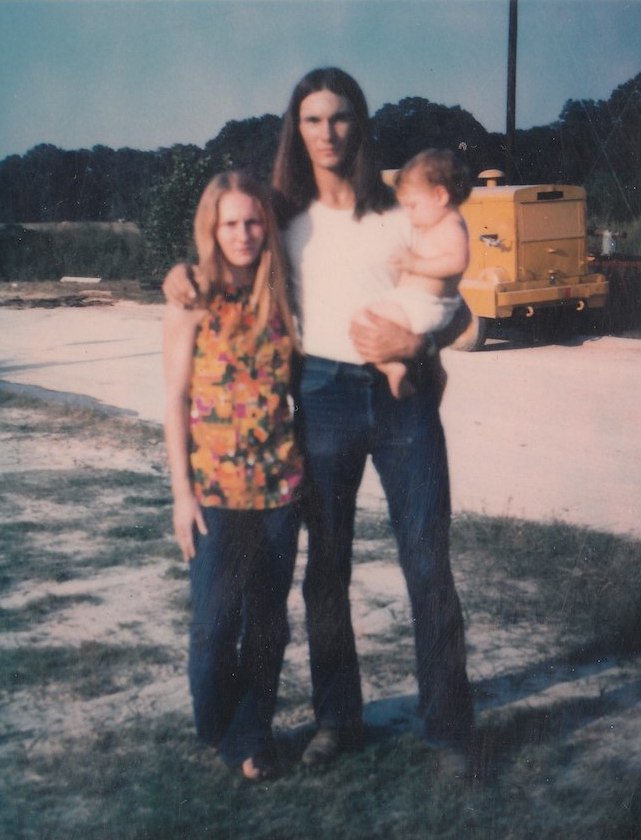
Because of Time magazine and Hoffa’s rants, all of America knew that Big Daddy was in jail for kidnapping when he made a deal to get Hoffa, and most people, even hitmen, know the golden rule of do onto others as you’d have them do onto you. Wendy did not have a car and she and I were usually at home alone. She was a petite teenager and I called her Wendy; most people thought I was her little brother. Anyone looking up Edward G. Partin’s home address and showing up unannounced would have assumed Wendy and I were Big Daddy’s children.
I have flashes of memories from my first few years of life, and they’re all centered around bursts of pain and fear and fire and explosions and burning houses and Wendy screaming and people grabbing my arms and me waking up in hospitals. I have scars on the back of my head I do not recall receiving, and x-rays of my left elbow show growth plates hindered by an old fracture I do not remember breaking.
I do not know what happened to Wendy, but around that time is when she fled Louisiana.
Like most of my family history, almost everything is now online for public review. Lottinger spent a year coaching Wendy to meet state requirements for a child in guardianship to reunite with a biologic parent. My custody court hearings is on file at the East Baton Rouge Parish 19th Judicial District courthouse with Judge JJ Lottinger presiding, filed on 26 September 1976.
This is what Judge JJ said:
This is a suit by Edward Partin, Jr., plaintiff, seeking a divorce from his wife, Wendy Rothdram Partin, defendant, after having lived separate and apart for more than one year following a judgment of separation from bed and board. Plaintiff also seeks custody of the minor child, Jason Ian Partin, and the defendant reconvened asking that she be granted the permanent care, custody and control of the minor child.
The Trial Court had previously, by ex parte order, awarded the temporary care, custody and control of the minor to Mr. and Mrs. James Ed White. Following trial on the merits, plaintiff was awarded a divorce as well as the permanent care, custody and control of the minor child, with the temporary physical custody of the minor child to remain with Mr. and Mrs. James Ed White. The defendant has appealed this judgment as it regards the custody of the child.
This couple was married when plaintiff was 17 and the defendant was 16 years of age. Nine months following the marriage, they gave birth to young Jason. While we are not concerned with the facts surrounding the separation and divorce, it was apparently one of incompatibility as defendant testified that at the age of 17 she found herself married to a man who did not love her and so she left. Her testimony was as follows:
“As I say I was emotionally upset. I was receiving little support from Edward. I was scared, very confused. I didn’t know exactly which way to turn. I felt I had no one to listen and help with the situation at hand.”
Several weeks later she returned and lived with her husband again. She found that the situation hadn’t changed, and felt she had to get away again. She heard of a man who wanted someone to share expenses on a trip to California, so she quit her job and with her last wages left with him. She testified that she had no sexual relations with this man, and plaintiff does not accuse her of such. Following this trip she returned to Baton Rouge still emotionally upset. Her husband was suing her for separation and told her he was going to take custody of Jason. She went to live with her aunt and uncle, got a full time job with Kelly Girls paying $512.00 per month.
In February, 1975, the defendant’s mother was injured in an accident and she moved in with her to care for her. In September, 1975, following the recuperation of the mother she returned to live with her aunt and uncle.
During these above periods of time, the minor child lived with Mr. and Mrs. White. The Whites came to regard Jason as their own and, although the separation judgment awarded custody to the plaintiff with reasonable visitation privileges to the defendant, the Whites decided the defendant-mother could only see the child two days a month and that she could never keep the child over night. The reason the defendant did not contest custody at the separation trial was because at the time she felt unable emotionally and financially to care for her son.
We note that the petition for separation was grounded on habitual intemperance, as well as abandonment of the husband and the minor child. There are no other grounds listed for the separation nor for custody. The petition for the separation and custody of the minor child was not contested by the defendant, and a default judgment was granted. Defendant testified in the instant proceedings that the reason she did not contest custody in the separation proceeding was that she was not financially or emotionally capable of caring for the minor, and that knowing the Whites were going to be caring for him, she knew he would be in good hands.
Though the petition for separation had as one of its allegations “habitual intemperance”, the plaintiff in the instant proceeding testified that he had never accused his wife of drinking, nor had he ever seen her drink.
The welfare of the child is the main issue that the Court is concerned with. This issue is more important than any wishes or wants the parents may have. Fulco v. Fulco, 259 La. 1122, 254 So.2d 603 (1971), rehearing denied (1971). As a general rule, and in particular where children of young age are involved, preference is given to the mother in custody cases. This preference is very simply explained, the mother is normally better able to care for the child and look after the education, rearing, and training necessary. Estes v. Estes, 261 La. 20, 258 So.2d 857 (1972), rehearing denied (1972).
No argument is made that the mother is not now morally or emotionally fit to care for the child, or that the house in which she lives is not a proper place to rear a child. In fact, the Trial Judge admitted that it was a fine home.
The Trial Judge has not favored us with written reasons for judgment, however, we must conclude from various statements by the Trial Judge that appear in the record that he could find no fault with the defendant, nor was there anything wrong with the house in which she lived. It thus becomes apparent to this Court that the Trial Judge applied the “double burden” rule to the defendant. We have already ruled that the “double burden” rule does not apply in this situation, and thus, under the established jurisprudential rules, we can see no reason why the defendant-mother should not be granted the permanent care, custody and control of the minor child with reasonable visitation privileges granted to the father.
In consideration of our above opinion, there is no need to discuss the specification of error as to the ex parte granting of custody to the Whites.
Therefore, for the above and foregoing reasons, the judgment of the Trial Court is reversed, and IT IS ORDERED, ADJUDGED AND DECREED that the defendant-appellant, Wendy Rothdram Partin, be and she is hereby granted the permanent care, custody and control of the minor, Jason Ian Partin, and IT IS FURTHER ORDERED, ADJUDGED AND DECREED that this matter be and it is hereby remanded to the Trial Court for the purpose of fixing specific visitation privileges on behalf of plaintiff-appellee Edward Partin, Jr. All costs of the appeal are to be paid by plaintiff-appellee.
After I downloaded that in 2019, the first thing that jumped at me was that I was surprised to realize that I had – and have – memories of Judge JJ Lotinger; he told me I could call him Judge JJ.
The next thing that jumped out at me was that my mind placed a teenage Wendy’s soft southern accent say Judge JJ’s words, and this is what I heard:
“As I say I was emotionally upset. I was receiving little support from Edward. I was scared, very confused. I didn’t know exactly which way to turn. I felt I had no one to listen and help with the situation at hand.”
Hoffa vanished on 22 July 1975, allegedly by Frank The Irishman Sheeran when he pointed a .38 at the back of Hoffa’ head and with two quick shots painted a Detroit suburban house red with Hoffa’s blood. Hoffa’s disappearance was international news, and within days Edward Partin was no longer necessary to anyone. Big Daddy lost his federal protection and the mafia quickly ignored Baton Rouge. That’s when Judge JJ Lottinger assumed oversight of my case in the East Baton Rouge Parish 19th Judicial District and began helping Wendy get custody of me.
I would find a lot of mistakes in my years of research. But believed truths are just as strong as any truth at that moment, and what Wendy said was true to her at that time. She felt there was no one who could help her. She became an alcoholic later in life and she died of liver failure at age 63, forty five years after fighting the Partins to get custody of me.
That was what I couldn’t find the words to tell when I wrote my mother’s obituary; it was short and sweet, just like she was. It took me looking at her as a 16 year old girl through the lens of time and knowing what I know now to see just how hard life must have been for my mother.
It isn’t until the summer of 1976 that my memories begin to take root and I know rather than believe what happened. Those memories begin with Mr. James “Ed” White, the man who kept me safe when no one else would. In the battle of nature versus nurture, PawPaw was on the front line.
His story is next.
But whatever I do, it’s in honor of my mother, Wendy Anne Rothdram Partin; may she rest in peace.
Go to the Table of Contents
- As soon as Big Daddy stood up as the surprise witness in Chatanooga, Hoffa focused all of his energy and resources on avoiding prison. The Chatanooga Choo Choo was a popular folk song that sang, “Pardon me boy, is that that the Chatanooga Choo Choo?” Hoffa called his trial in Chatanooga, Tennesee, the Chatanooga Choo Choo because he said that’s where Bobby Kennedy used Big Daddy to railroad him into prison. Hoffa liked the phrase so much that he titled Chapter 10 of his 1975 autobiography The Chatanooga Choo Choo and focused it around Big Daddy, though by then he had stopped using the pun “Partin, me boy…” He began Chapter 10 by saying “Edward Partin was a big, rugged guy who could charm a snake off a rock,” implying that’s why Hoffa trusted him and how that trust is what sent him to prison. ↩︎
- In the 1990’s, Frank Ragano served in prison for tax evasion. In 1997 he died in his sleep. I believe he had said everything he wanted to say. ↩︎